7 Hidden Signs of Smoke Damage You Might Miss After a Fire
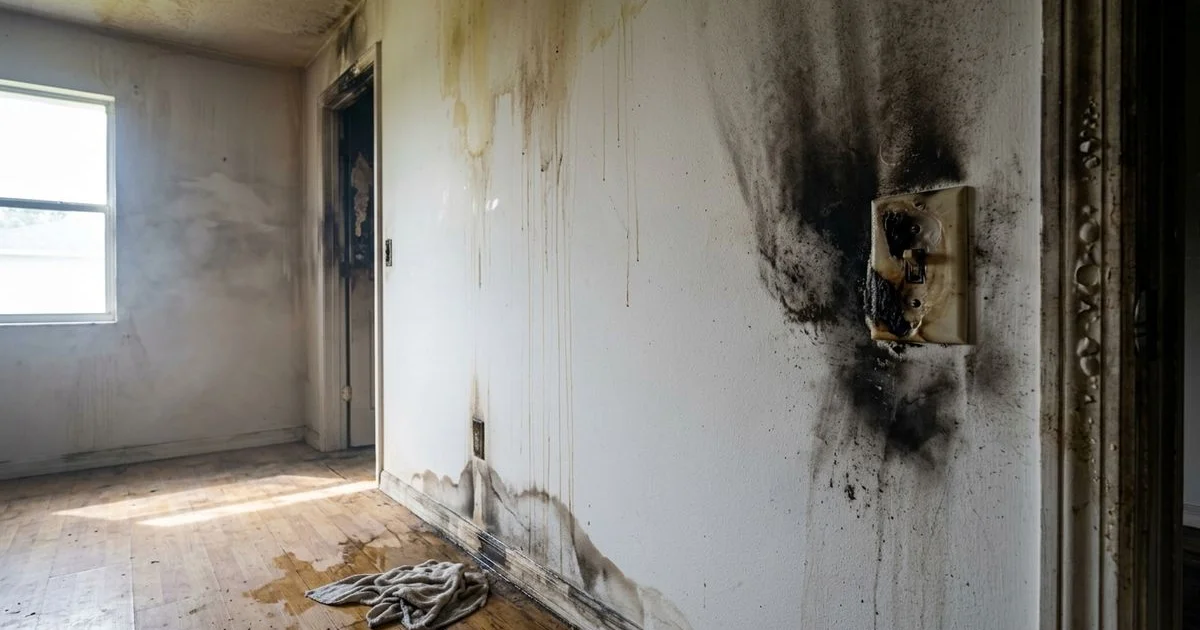
We see exactly how deceptive property damage can be. The charred walls and collapsed ceilings are obvious. The invisible damage is what truly worries property owners.
Structural issues hiding behind the drywall often present the largest long-term financial risks.
Our teams prioritize finding the 7 Hidden Signs of Smoke Damage You Might Miss After a Fire. Smoke and soot travel relentlessly through air currents and ductwork. They deposit acidic residue on surfaces far away from the actual flames.
We watch this hidden contamination cause ongoing deterioration and serious health hazards if left unaddressed. These invisible threats require immediate attention. The following steps will show you exactly what to inspect before the damage becomes permanent.
1. Discoloration on Distant Walls and Ceilings
Smoke rarely stays confined to the origin room. It migrates rapidly through open doorways, HVAC returns, and the tiny gaps around electrical outlets. You might spot yellowing, gray streaks, or a filmy haze on surfaces far from the flames. Look closely at upstairs rooms, spaces connected by ductwork, and areas near stairwells.
We often find clients confusing this specific damage with regular household dust.
Ionization during a high-heat fire causes soot particles to attract each other and form long chains. These chains create what restoration experts call “smoke webs.”
These smoke webs look exactly like black cobwebs in the upper corners of your rooms. This strange webbing is a clear indicator of synthetic material combustion.
You should never try to wipe these webs away with a standard cloth. Wiping them will smear the greasy soot deep into the drywall paint. A professional evaluation is necessary to clean the residue before the staining becomes permanent.
2. Smoke Odor in HVAC Ductwork
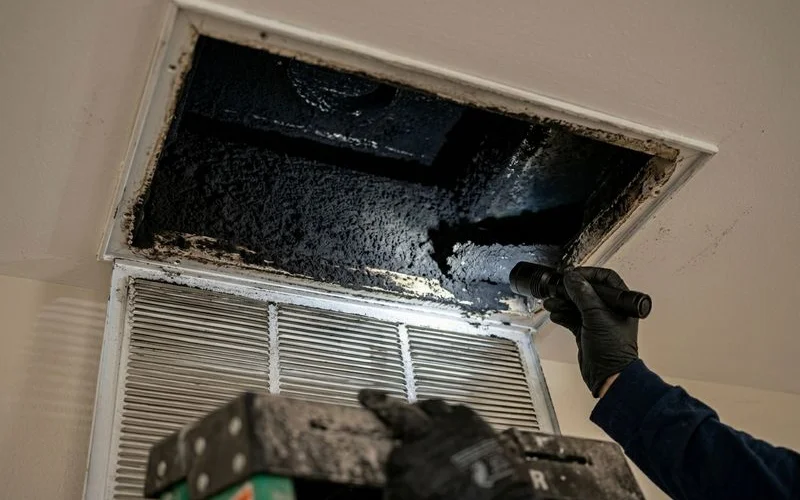
Your HVAC system functions as a high-speed transit network for smoke distribution. The return air ducts pull contaminated air into the system during a fire event. This coats the interior of your ductwork, the evaporator coil, and the air handler with toxic soot. Every time the system kicks on, it pushes these hazardous particles right back into your living spaces.
The Limits of Standard Air Filters
We constantly remind property owners about the limits of standard air filtration. The Environmental Protection Agency notes that standard MERV 8 residential filters miss up to 80% of fine smoke particles.
Soot particles from a fire typically measure between 0.4 and 0.7 microns in size. This microscopic size allows them to easily bypass basic fiberglass filters.
Turn your system on and stand near a supply vent to check for contamination. A distinct smoky smell means your ductwork requires immediate attention.
You should schedule a full inspection even if you cannot smell anything right away. Lingering soot residue releases odors very gradually over several months.
3. Soot in Electrical Outlets and Switch Plates
Electrical outlets and switch plates are essentially open doors to your wall cavities. Smoke travels freely through these concealed spaces behind the drywall.
You can check for damage by removing an outlet cover in a room far from the fire. Look for dark soot deposits gathering around the opening and directly on the wiring.
Our technicians treat soot inside electrical outlets as an immediate critical hazard. The National Fire Protection Association warns that carbonized soot is a semiconductor.
It severely lacks electrical insulating properties and conducts electricity quite easily. Heavy soot deposits on wiring connections create a massive risk for arcing faults.
Hidden Electrical Fire Hazards
This arcing can easily spark a secondary electrical fire hidden inside your walls. Finding soot in your outlets means the insulation and framing are completely contaminated. A qualified professional must clean and inspect these electrical components before you turn the power back on.
4. Tarnishing on Metal Surfaces
Smoke residue carries highly corrosive acids created by burning household materials. These include sulfuric acid from plastics and organic acids from burned fabrics. These caustic compounds rapidly corrode metal finishes throughout the building. You might see this damage in rooms that seem entirely unaffected by the actual flames.
We frequently see extensive metal pitting caused by burning plumbing pipes or vinyl siding. Burning PVC releases toxic hydrogen chloride gas into the air. This gas mixes with the natural humidity in your home to form hydrochloric acid. The resulting acid can permanently pit and ruin chrome fixtures in under 72 hours.
Look for these specific signs of rapid metal corrosion:
- Brass doorknobs and hinges turning dark or green.
- Chrome faucets developing a hazy, pitted film.
- Silver items tarnishing in a matter of hours.
- Copper pipes showing heavy green discoloration.
Metal tarnishing requires extremely fast intervention. Acidic soot destroys metals deeper with every passing hour. You can usually restore surfaces cleaned within the first two days. Items ignored for several weeks will likely need complete replacement.
5. Persistent Odor in Soft Furnishings
Porous materials act like massive sponges for microscopic smoke particles. Mattresses, upholstered furniture, heavy curtains, and carpets absorb odors rapidly.
These items serve as hidden reservoirs that slowly release the smell back into your rooms. Florida humidity easily reactivates these trapped odor molecules on warm days.
Our experts understand exactly why these smells are so difficult to remove. Fabric fibers physically expand when exposed to the intense heat of a fire.
They act like open pores capturing soot particles ranging from 0.1 to 4 microns in size. The fibers then contract as the room cools down, permanently locking the contaminants inside the material.
Many people try to mask this smell with store-bought air fresheners. Masking agents cannot reach the microscopic particles trapped deep inside the fabric weave. The item will continue releasing odors until a professional neutralizes the source.
Advanced Odor Removal Solutions
We utilize advanced commercial technology to solve this specific problem. Hydroxyl generators are the safest and most effective method for occupied spaces.
These machines produce hydroxyl radicals that break apart odor molecules at a chemical level. Ozone treatments are also highly effective, but they are strictly limited to specific protein-based cooking fires.
6. Residue Behind Closed Cabinet and Closet Doors
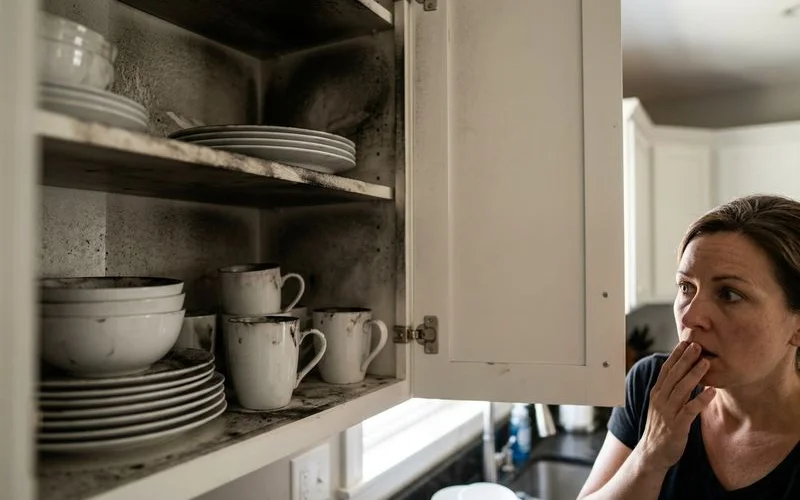
Intense air pressure forces smoke into tightly enclosed spaces during a severe fire. Smoke easily pushes past cabinet hinges, door gaps, and frame joints.
These dark spaces then trap the acidic residue and odors indefinitely. You must open every single storage area in your home to check for hidden contamination.
Our safety protocols mandate a strict evaluation of kitchen cabinets after any fire. The USDA Food Safety guidelines specifically warn about toxic off-gassing near food items.
You must immediately discard any food stored in permeable packaging like cardboard or thin plastic. Toxic fumes can easily penetrate these materials and make the food unsafe for consumption.
Inspect your enclosed spaces for the following warning signs:
- Visible soot coating the interior shelving.
- Strong odors hitting you when opening the doors.
- Dark thermal “ghosting” marks forming around stored items.
- Hazy residue settling on glasses and dishes.
7. Damage to Electronics and Appliances
Fine soot particles easily penetrate the cooling vents of your expensive electronics. Computers, gaming consoles, and kitchen appliances are highly vulnerable to this microscopic debris.
The acidic nature of the soot immediately begins attacking circuit boards and sensitive internal components. Your devices might appear to function perfectly fine right after the incident.
We often see electronics fail completely weeks after the initial property loss. Circuit bridging happens when conductive soot deposits allow electrical current to leak across components.
The zinc and copper used on printed circuit boards undergo rapid galvanic corrosion. This specific chemical reaction destroys delicate solder joints and ruins the equipment permanently.
Never power on any electronic device that sat in a smoke-affected room. Turning the device on with contaminated components causes immediate short circuits.
You must have a professional evaluate the equipment before restoring power.
Why Early Detection Matters
Smoke damage is a relentlessly progressive issue. The acidic compounds in the soot continue to eat away at finishes and degrade materials over time. The clock starts ticking the moment the flames are extinguished. Identifying the contamination quickly drastically improves your chances of saving your property.
Our restoration teams follow strict timelines to minimize permanent material loss. The table below outlines the rapid progression of untreated acidic soot.
Restoration Timeline and Salvageability
| Time Elapsed | Damage Progression | Salvage Potential |
|---|---|---|
| First 24-48 hours | Residue settles on surfaces. | High. Most items clean easily without permanent staining. |
| 3-7 days | Acids begin staining drywall. Metal corrosion deepens. | Moderate. Hydrochloric acid pitting requires specialized restoration. |
| 1-4 weeks | Plastics, vinyl, and painted finishes permanently discolor. | Low. Extensive parts replacement is often necessary. |
| 1+ months | Deep metal corrosion. Odors permanently bind to fabrics. | Very Low. Total replacement of affected items is required. |
Early detection stops this destructive cycle in its tracks. Fast action lowers your total reconstruction costs and saves your valuable belongings.
Professional Smoke Damage Assessment
A proper property assessment goes far beyond just looking at the charred remains. Certified technicians inspect your complex ductwork, hidden wall cavities, and vulnerable electrical systems.
We use specialized tools like thermal cameras and chemical sponges to find exactly where the danger hides. This detailed testing identifies all visible and microscopic contamination throughout the building. Thorough inspections ensure nothing is missed.
Our experts develop a comprehensive plan to safely neutralize every hazard. Advanced hydroxyl generators and commercial HEPA filtration systems restore your indoor air quality.
True restoration requires removing the chemical source, not just wiping down the walls.
Call (239) 323-1779 for a professional smoke damage assessment after any fire in your Cape Coral home. Fast professional help saves time, money, and your peace of mind.

Paul Breehne
Regional Franchise Operator
Paul Breehne is a Regional Franchise Operator for Shoreline Water & Restoration in Southwest Florida, bringing over a decade of hands-on restoration experience to the Cape Coral market.
Need Emergency Restoration?
Shoreline Water & Restoration provides 60-minute emergency response in Cape Coral.
Call (239) 323-1779