Safe Sewage Backup Cleanup in Cape Coral
Professional sewage backup cleanup including Category 3 black water extraction, complete decontamination, and antimicrobial sanitization.
Emergency CallA sewage backup is a health emergency. Sewage water — classified as Category 3 (black water) by the IICRC — contains dangerous concentrations of bacteria, viruses, parasites, and chemical contaminants. E. coli, Salmonella, Hepatitis A, and other pathogens can cause serious illness from direct contact, inhalation of contaminated air, or contact with surfaces that have not been properly decontaminated. This is not a cleanup you should attempt yourself.
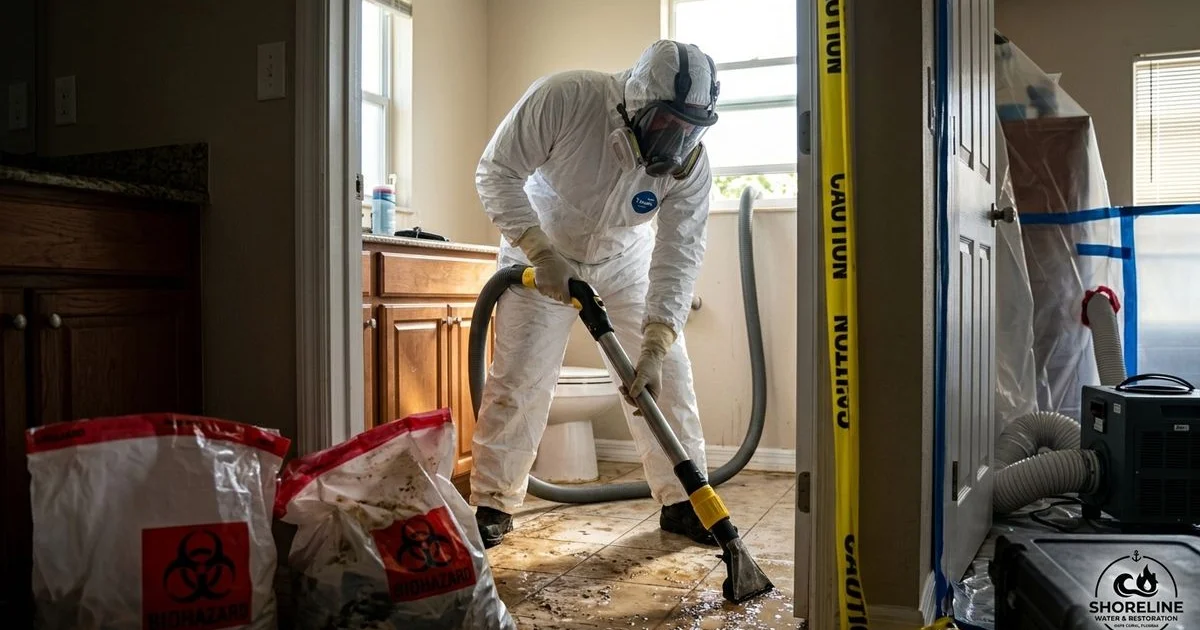
Shoreline Water & Restoration provides professional sewage backup cleanup for Cape Coral homes and businesses. Our certified technicians use full personal protective equipment (PPE), hospital-grade disinfectants, and strict containment protocols to safely extract sewage, decontaminate all affected areas, and restore your property to safe, healthy conditions.
Sewage Backup Cleanup Process
Step 1: Safety Assessment Before entering the affected area, our technicians assess hazards including electrical dangers (water contact with outlets, appliances, or electrical panels), structural integrity, and contamination levels. Power to the affected area is shut off if not already done. Only trained technicians in full PPE enter the contaminated zone.
Step 2: Containment We establish physical containment barriers between the contaminated area and the rest of your property. HVAC systems are shut down to prevent contaminated air from circulating. Negative air pressure machines with HEPA filtration are deployed to capture airborne pathogens and prevent cross-contamination.
Step 3: Black Water Extraction Using sealed extraction equipment, we remove all sewage water from floors, carpets, and structural cavities. All extracted material is contained and disposed of according to Florida Department of Health regulations for biohazardous waste. Contaminated carpet, padding, and porous materials are removed, bagged, and disposed of — these materials cannot be safely decontaminated.
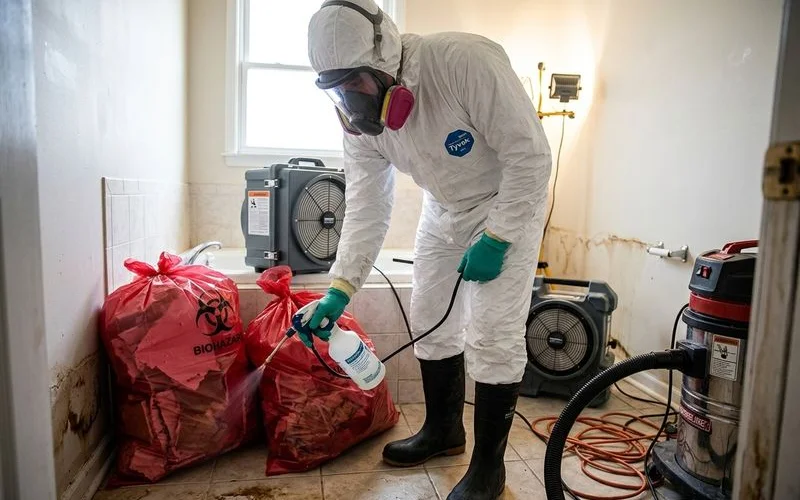
Step 4: Demolition of Contaminated Materials Drywall that has contacted sewage water is removed to at least 12 inches above the visible contamination line. Insulation, baseboards, and any porous materials that absorbed sewage are demolished and disposed of. Subflooring is assessed — particleboard and OSB that have absorbed sewage typically must be replaced, while concrete slabs can be decontaminated.
Step 5: Decontamination and Disinfection All remaining structural surfaces are cleaned with hospital-grade disinfectants and antimicrobial solutions. We use a multi-step process: initial cleaning with enzymatic cleaners to break down organic material, followed by application of EPA-registered disinfectants with documented efficacy against the full spectrum of sewage-borne pathogens. Surfaces are treated multiple times and allowed to maintain contact with disinfectants for the required dwell time.
Step 6: Air Quality Restoration Sewage backups contaminate indoor air with bioaerosols and toxic gases including hydrogen sulfide and methane. We run HEPA air scrubbers and hydroxyl generators continuously until air quality testing confirms that airborne contamination levels have returned to safe standards. Odor elimination is addressed through the decontamination process and supplemental treatments as needed.
Step 7: Structural Drying and Restoration After decontamination is verified, structural drying proceeds using standard commercial equipment — dehumidifiers and air movers. Once target moisture levels are achieved, reconstruction begins: new drywall, insulation, flooring, baseboards, and paint to restore your property.
Common Causes of Sewage Backups in Cape Coral
- Main sewer line blockages — tree root intrusion, grease buildup, and aging pipes can block the main sewer line, causing sewage to back up through floor drains and toilets
- Municipal system overload — during heavy rainfall, combined sewer systems can become overwhelmed, pushing sewage back into connected properties
- Septic system failures — properties on septic systems may experience backups from tank overflow, drain field failure, or high water table conditions
- Toilet and drain line failures — individual fixture clogs, combined with failed check valves, can cause localized sewage overflows
Health Risks of Sewage Exposure
Sewage exposure poses serious health risks that should not be underestimated:
- Bacterial infections — E. coli, Salmonella, Shigella
- Viral infections — Hepatitis A, Rotavirus, Norovirus
- Parasitic infections — Giardia, Cryptosporidium
- Respiratory illness — from inhalation of contaminated aerosols
- Skin infections — from direct contact with contaminated surfaces
If anyone in your household has been exposed to sewage water, seek medical attention. Do not attempt to clean sewage yourself — the health risks are significant without proper PPE and decontamination protocols.
Insurance Coverage for Sewage Backups
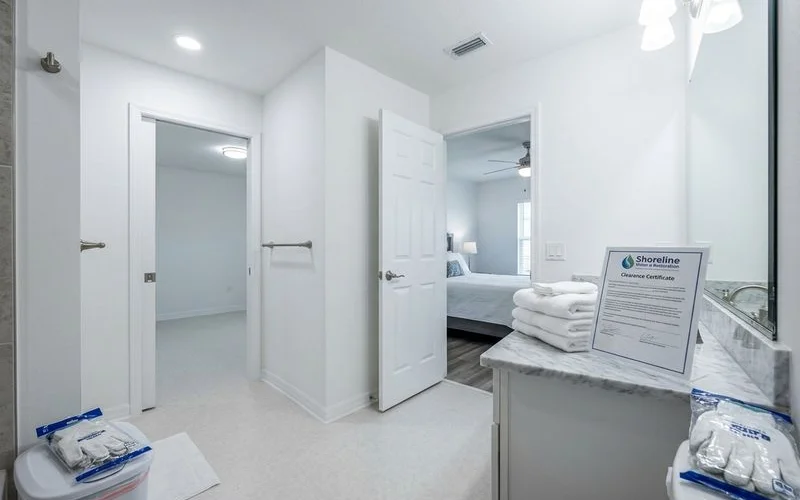
Many homeowner policies include coverage for sewage backup damage, though it may be listed as a separate endorsement (often called “sewer and drain backup coverage”). Coverage limits vary by policy. We work with your insurance carrier to document the damage, submit detailed estimates, and coordinate the claims process.
Call (239) 323-1779 for immediate sewage backup cleanup in Cape Coral. Health hazard — do not delay. Available 24/7.
Ready to Get Started?
Call now for a free assessment and 60-minute emergency response in Cape Coral.