Certified Mold Removal and Remediation in Cape Coral
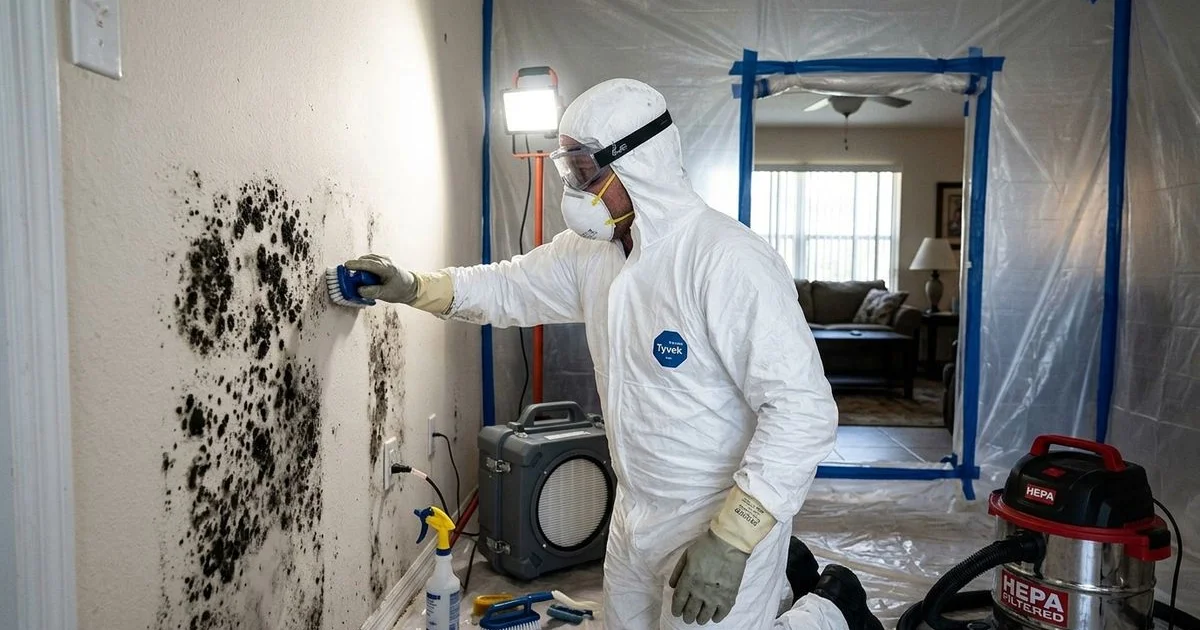
Professional mold inspection coordination, strict containment, HEPA air filtration, safe removal of mold-infested materials, and complete surface sanitization.
Emergency CallFlorida’s subtropical climate creates ideal conditions for mold growth. With average humidity levels above 70% and temperatures rarely dropping below 60°F, Cape Coral homes are under constant threat of mold colonization — especially after any water intrusion event. Mold can begin growing within 24 to 48 hours of moisture exposure, spreading through wall cavities, under flooring, and inside HVAC systems where it remains hidden until health symptoms or visible damage appear.
Shoreline Water & Restoration provides comprehensive mold remediation services for Cape Coral homes and businesses. Our IICRC-certified mold remediation specialists (AMRT — Applied Microbial Remediation Technician) use strict containment protocols, negative air pressure systems, and HEPA filtration to safely eliminate mold and prevent cross-contamination during the remediation process.
Our Mold Remediation Process
Step 1: Inspection Coordination and Assessment We coordinate with independent, state-licensed mold assessors to conduct professional mold inspections and air quality testing. This third-party testing ensures objective results and is often required by Florida law before remediation begins. If you’re wondering how inspection fits into the bigger picture, our article on the difference between mold testing and remediation explains the distinction. We also conduct our own visual assessment and moisture mapping to identify the full extent of mold growth and its moisture source.
Step 2: Containment Setup Before any mold is disturbed, we establish strict containment using polyethylene sheeting, negative air pressure machines, and HEPA air scrubbers. This prevents mold spores from spreading to unaffected areas of your property during removal. All HVAC systems in the containment zone are shut down and sealed.
Step 3: HEPA Air Filtration Industrial HEPA air filtration devices run continuously throughout the remediation process, capturing 99.97% of particles down to 0.3 microns — including mold spores. Negative air pressure inside the containment area ensures that any airborne spores are drawn through the filtration system rather than escaping into clean areas.
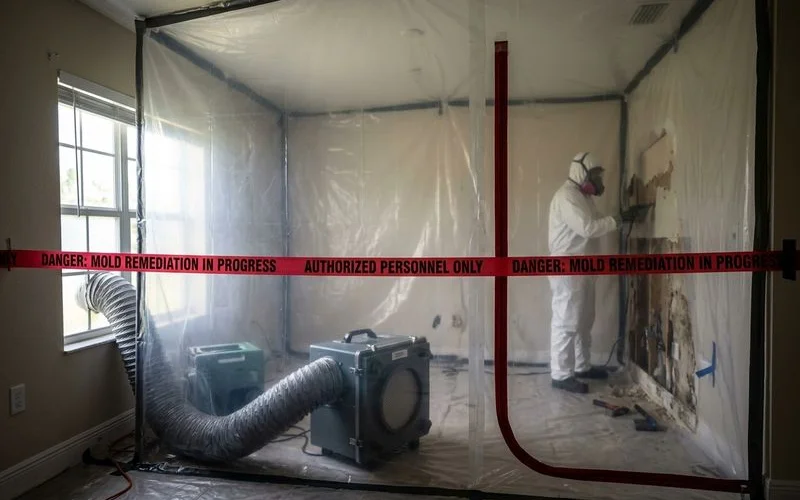
Step 4: Mold Removal Mold-infested materials that cannot be salvaged — including drywall, insulation, carpet, and porous materials — are carefully removed, bagged in sealed containers, and disposed of according to environmental regulations. Non-porous surfaces are cleaned using antimicrobial and antifungal treatments, then HEPA vacuumed to remove all residual spore material.
Step 5: Moisture Source Correction Mold remediation is only permanent if the moisture source is eliminated. Our technicians identify and address the underlying cause — whether it is a plumbing leak, roof penetration, poor ventilation, or elevated groundwater. We install dehumidifiers and monitor moisture levels to ensure conditions are no longer conducive to mold growth.
Step 6: Post-Remediation Verification After remediation is complete, we coordinate a post-remediation inspection and air quality test by the same independent assessor. This clearance testing verifies that mold levels have returned to normal background levels and that the remediation was successful. Only after clearance is achieved do we proceed with restoration.
Common Mold Types in Cape Coral
Cape Coral properties are susceptible to several mold species due to the warm, humid climate:
- Aspergillus — commonly found after water damage, grows on walls, insulation, and HVAC systems
- Penicillium — spreads rapidly on water-damaged materials, often blue or green
- Stachybotrys (Black Mold) — requires sustained moisture, often found behind walls after hidden leaks
- Cladosporium — thrives in HVAC systems and on damp surfaces
- Chaetomium — common after flooding, produces a musty odor
Health Concerns and Mold
Mold exposure can cause respiratory issues, allergic reactions, headaches, fatigue, and more serious health problems for individuals with compromised immune systems. If you notice musty odors, visible mold growth, or experience unexplained health symptoms in your Cape Coral home, contact us for an immediate assessment.
Insurance and Mold Remediation
Coverage for mold remediation varies by insurance policy. Many Florida homeowner policies include mold coverage when the mold results from a covered water damage event (such as a burst pipe or appliance failure). Some policies have separate mold damage limits. For a detailed breakdown of typical expenses, see our guide to mold remediation costs in Cape Coral. Our team reviews your policy, documents the connection between water damage and mold growth, and handles all insurance coordination.
Why Choose Shoreline for Mold Remediation
Our technicians hold IICRC AMRT (Applied Microbial Remediation Technician) certification and follow the S520 Standard for Professional Mold Remediation. We use only EPA-registered antimicrobial products and maintain strict chain-of-custody documentation. As a licensed Florida builder, we also handle any reconstruction needed after mold-damaged materials are removed — drywall, flooring, painting, and finish work.
Call (239) 323-1779 now for professional mold remediation in Cape Coral. Free assessment available.
Frequently Asked Questions
How do I know if I have mold in my Cape Coral home?
Common signs include musty odors, visible dark spots on walls or ceilings, recent water damage or leaks, increased allergy symptoms, and peeling paint or wallpaper. In Florida's humid climate, mold can grow within 24-48 hours after water exposure. If you suspect mold, call us for a professional assessment — we coordinate with certified testing labs.
Is mold in my home dangerous to my family's health?
Yes, certain mold species — particularly black mold (Stachybotrys) — can cause respiratory issues, allergic reactions, headaches, and more serious health effects with prolonged exposure. Children, elderly individuals, and those with compromised immune systems are most vulnerable. Professional mold remediation ensures complete removal and safe air quality restoration.
How long does mold remediation take?
Most residential mold remediation projects take 3 to 5 days, depending on the extent of contamination and the size of the affected area. This includes containment setup, removal of affected materials, HEPA air filtration, surface treatment, and post-remediation verification testing. Larger or more severe cases may take 1 to 2 weeks.
Ready to Get Started?
Call now for a free assessment and 60-minute emergency response in Cape Coral.