Water Damage Risks Unique to Cape Coral Canal-Front Homes
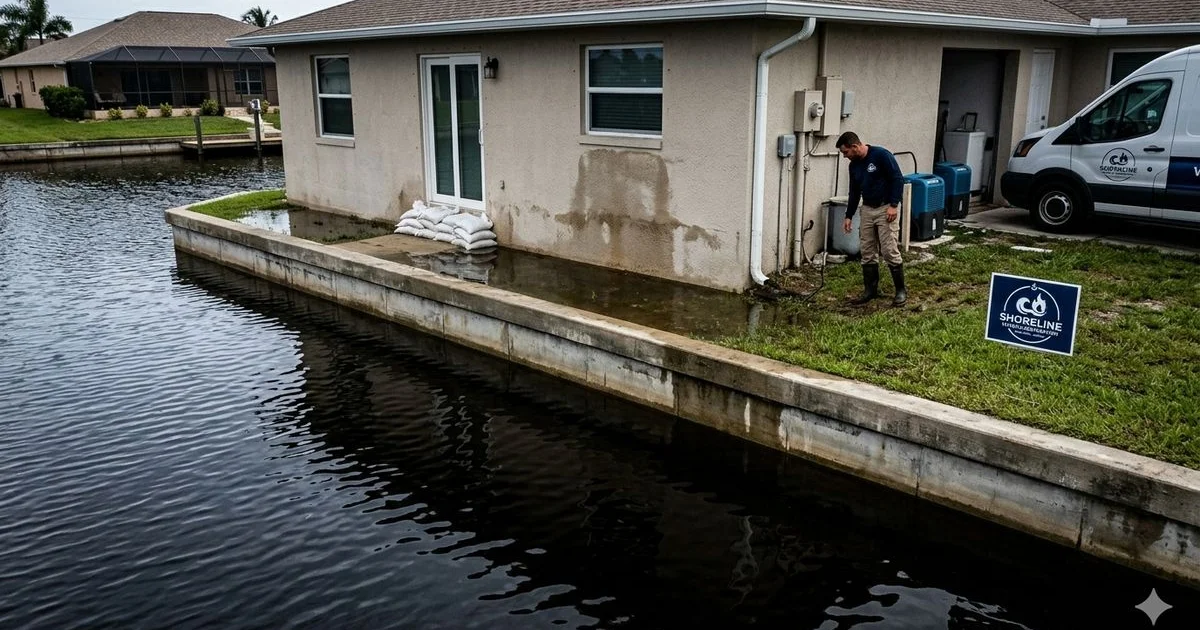
Cape Coral is home to over 400 miles of navigable canals — more than any other city in the world. These canals are the defining feature of the city, offering waterfront living and boat access to the Gulf of Mexico. But canal-front properties face water damage risks that inland homes do not, and many canal-front homeowners are unaware of these unique vulnerabilities until damage occurs.
As restoration professionals who have served Cape Coral since 2001, we have seen patterns of water damage in canal-front homes that repeat year after year. Understanding these risks can help you protect your property and respond quickly when problems arise.
Tidal Flooding and Storm Surge
Cape Coral’s canal system connects to the Caloosahatchee River and ultimately to the Gulf of Mexico. This means canal water levels are influenced by tides, which creates two specific risks:
King tides — exceptionally high tides that occur several times per year can raise canal levels above normal seawall heights, pushing water onto properties and into homes through ground-level entry points. King tide events have become more frequent and severe in recent years.
Storm surge — during hurricanes and tropical storms, storm surge pushes Gulf water up through the canal system, raising water levels dramatically. Even storms that do not make direct landfall on Cape Coral can generate surge that floods canal-front properties. A Category 3 hurricane could produce 10 to 15 feet of storm surge in parts of the Cape Coral canal system.
High Water Table Moisture Intrusion
Cape Coral sits on a limestone substrate with a high water table — in many areas, the water table is just 2 to 4 feet below the surface. Canal-front properties, with their proximity to standing water, often have even higher water tables. This creates several problems:
Slab moisture intrusion — during heavy rains or high tides, the water table can rise to the level of your concrete slab foundation. Moisture wicks through the concrete and emerges beneath flooring, causing damage to tile adhesive, hardwood, laminate, and carpet from below. This damage often goes unnoticed until flooring begins buckling or mold grows at the floor-wall junction.
Elevated indoor humidity — the proximity to canal water keeps ambient humidity around canal-front homes consistently higher than inland properties. This elevated humidity stresses HVAC systems, promotes condensation on cool surfaces, and creates conditions favorable for mold growth — even without a specific water intrusion event.
Aging Seawall Failures
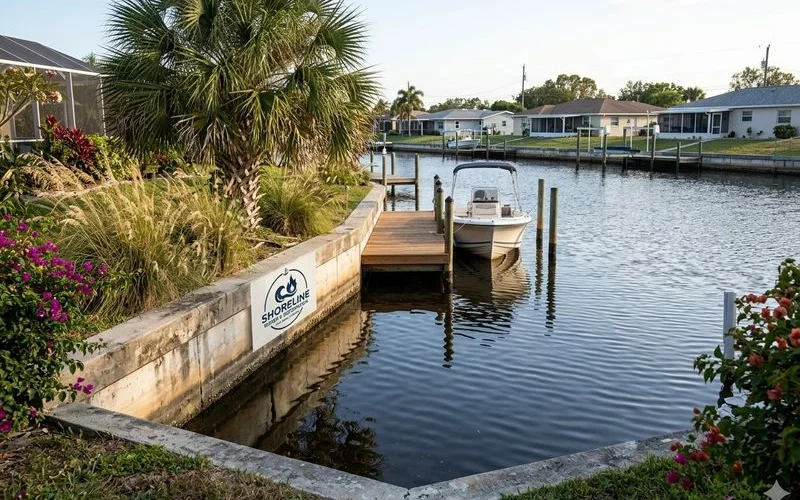
Many Cape Coral seawalls were constructed in the 1970s and 1980s using materials that deteriorate over time. Concrete seawalls develop cracks, steel reinforcement corrodes, and the soil behind the seawall erodes, creating voids. When a seawall fails:
- Canal water floods the yard and potentially the home
- Soil erosion undermines landscaping, patios, pool decks, and even building foundations
- Debris from the collapsed seawall can damage dock structures and boats
Seawall replacement is a significant investment ($200-$600+ per linear foot), but the cost of water damage from a failed seawall far exceeds the cost of proactive replacement.
Plumbing Challenges in Canal-Front Homes
Canal-front homes in Cape Coral face the same plumbing risks as all Cape Coral homes — copper pipe corrosion, polybutylene pipe failures, and aging supply lines — but with an added complication. The higher water table and soil moisture around canal-front properties can accelerate external corrosion of underground water supply lines and sewer connections, increasing the risk of failures and sewage intrusion.
Humidity and Mold in Canal-Front Properties
The constant presence of water adjacent to canal-front homes keeps outdoor humidity elevated, which affects indoor environments:
- HVAC systems work harder to dehumidify, and failures or periods of vacancy (common in seasonal/snowbird homes) allow indoor humidity to rise rapidly
- Closets, cabinets, and enclosed spaces in canal-front homes are particularly prone to mold growth due to limited air circulation and elevated ambient moisture
- Seasonal residents who close their homes for summer months often return to find mold growth that occurred during the humid, unoccupied summer months
Protecting Your Canal-Front Home
Monitor seawall condition. Have your seawall inspected periodically. Watch for cracks, leaning, soil erosion behind the wall, and any signs of water seeping through. Address problems early before failures occur.
Maintain proper drainage. Ensure that your property grades away from the foundation, gutters and downspouts direct water away from the home, and drainage swales function properly. Standing water near the foundation accelerates moisture intrusion.
Invest in a quality dehumidifier. Canal-front homes benefit from a whole-house dehumidifier integrated with the HVAC system. Maintaining indoor humidity below 60% significantly reduces mold risk.
Install flood sensors. Smart water leak detectors placed near ground-level entry points, in the garage, and near the water heater can alert you to water intrusion before significant damage occurs — especially valuable for seasonal residents.
Review your insurance coverage. Standard homeowner policies do not cover flood damage from rising water. Canal-front homeowners should carry flood insurance (NFIP or private) in addition to standard coverage. Review your policy to understand coverage limits, deductibles, and exclusions specific to water damage.
When to Call for Professional Assessment
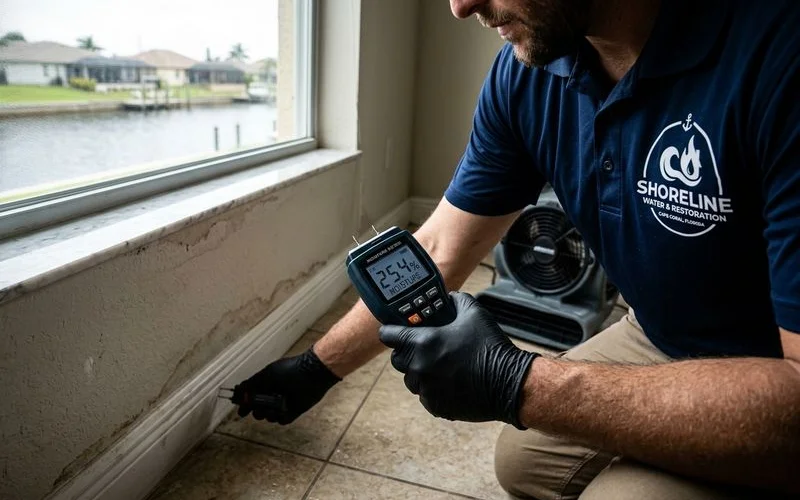
If you notice musty odors, unexplained humidity spikes, floor discoloration, or bubbling paint near floor level in your canal-front home, call for a professional moisture assessment. These symptoms often indicate moisture intrusion that has been occurring for weeks or months. Early detection and intervention prevents the problem from escalating into full-scale mold remediation.
Call (239) 323-1779 for a moisture assessment of your Cape Coral canal-front home. We understand the unique challenges of waterfront properties in Southwest Florida.

Gary Stone
Regional Franchise Operator
Gary Stone co-operates the Shoreline Water & Restoration Cape Coral franchise, specializing in commercial restoration and hurricane damage recovery.
Need Emergency Restoration?
Shoreline Water & Restoration provides 60-minute emergency response in Cape Coral.
Call (239) 323-1779