What to Expect During Fire Damage Restoration: A Cape Coral Homeowner's Timeline
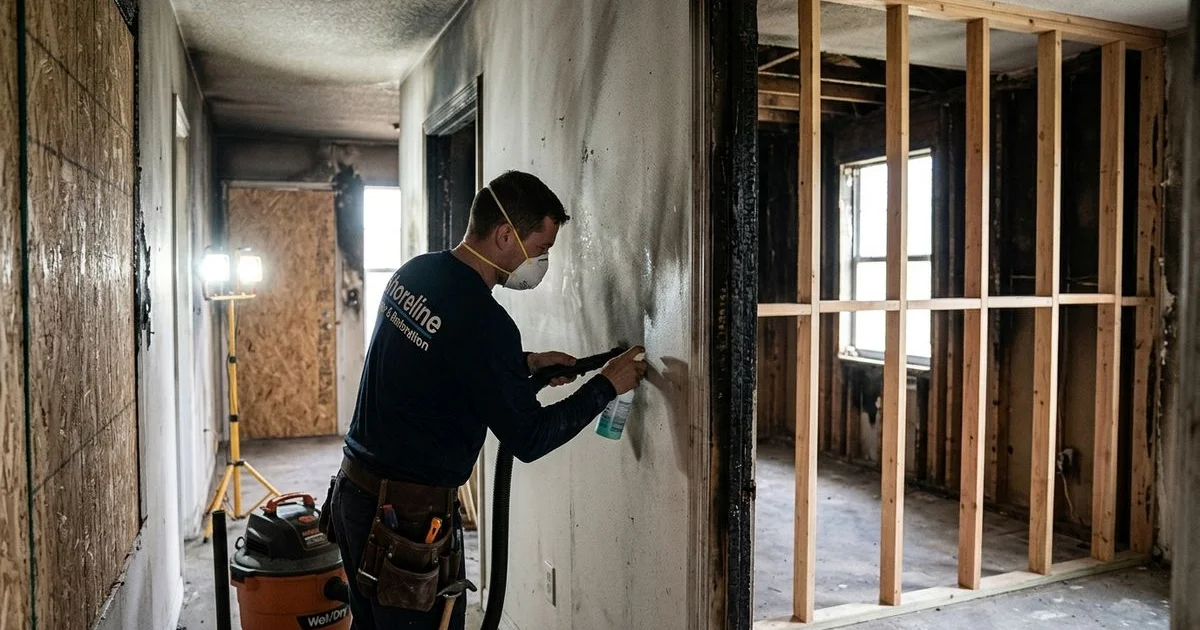
After a fire in your Cape Coral home, the path from damage to full restoration can feel overwhelming and uncertain. Understanding what happens at each stage — and how long each phase typically takes — helps you make informed decisions, set realistic expectations, and maintain control during a stressful time.
Here is a detailed timeline of the fire damage restoration process, from the first emergency call through final reconstruction and move-back.
Day 1: Emergency Response and Board-Up (Hours 1-12)
Within the first hour after you call, our emergency crew arrives to assess the situation and secure the property. This phase includes:
- Safety assessment — checking structural integrity, electrical hazards, and air quality before anyone enters
- Board-up and tarping — covering broken windows, damaged doors, and compromised roof sections with plywood and heavy-duty tarps to prevent weather damage, animal intrusion, and unauthorized entry
- Fire suppression water removal — beginning extraction of water from firefighting efforts, which can cause significant secondary water damage if not addressed immediately
- Initial damage documentation — photographing and documenting conditions for insurance purposes
What you should do: Contact your insurance company to report the loss. Arrange temporary housing if needed — your insurance likely covers Additional Living Expenses (ALE). Do not enter the property until it is cleared as structurally safe.
Days 2-5: Detailed Assessment and Planning
Once the property is secured, our restoration team conducts a comprehensive assessment:
- Structural engineering assessment — for significant structural damage, a licensed engineer evaluates load-bearing walls, roof trusses, and foundation
- Smoke and soot mapping — identifying all surfaces affected by smoke and soot, including hidden areas in wall cavities, attic spaces, and ductwork
- Water damage assessment — mapping moisture from firefighting water, which often causes as much damage as the fire itself
- Contents evaluation — cataloging damaged contents and identifying items that can be salvaged through professional cleaning versus items that must be replaced
- Xactimate estimate — preparing a detailed, line-item restoration estimate for your insurance carrier
What you should do: Meet with your insurance adjuster and the restoration team together. Review the scope of work and ask questions about anything you do not understand.
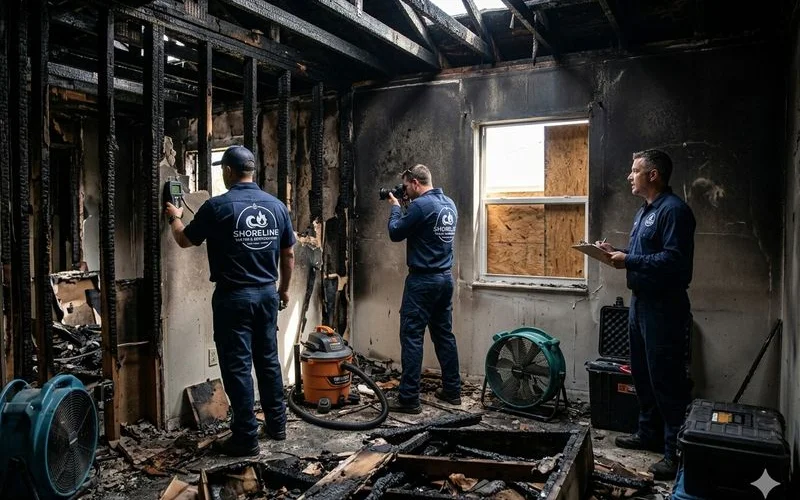
Days 3-10: Cleaning and Decontamination
With the scope defined, active restoration begins:
- Water extraction and drying — removing all firefighting water and deploying dehumidifiers and air movers for structural drying (this runs concurrently with fire cleaning)
- Soot removal — cleaning all affected surfaces using methods appropriate to the soot type (dry smoke, wet smoke, protein, or fuel residue)
- HEPA vacuuming — removing fine particulate from all surfaces, including inside wall cavities and ductwork
- Antimicrobial treatment — applying antimicrobial solutions to prevent mold growth in water-damaged areas
Days 5-14: Odor Elimination
Smoke odor removal is one of the most challenging aspects of fire restoration and often requires the longest treatment time:
- Thermal fogging — heated deodorizing agents are released as a fine fog that penetrates the same spaces smoke did, neutralizing odor at the molecular level
- Hydroxyl generators — these devices create hydroxyl radicals that break down odor-causing molecules in the air and on surfaces
- Ozone treatment — for severe odor cases, ozone generators are used in sealed, unoccupied spaces to oxidize residual smoke compounds
- HEPA air filtration — industrial air scrubbers run continuously to remove airborne particles and odor compounds
Odor treatment typically requires multiple rounds and verification. We do not consider odor elimination complete until no residual smoke smell can be detected.
Days 7-14: Contents Pack-Out and Cleaning
Salvageable contents are carefully inventoried, packed out, and transported to our cleaning facility:
- Textiles — clothing, linens, and fabrics are treated with specialized smoke odor removal processes
- Electronics — inspected, cleaned, and tested by qualified technicians
- Documents and photos — preserved, dried, and restored where possible
- Furniture — cleaned, deodorized, and refinished as needed
- Specialty items — artwork, antiques, and collectibles receive individualized treatment
Contents that cannot be restored are documented for your insurance contents claim.
Weeks 2-8: Reconstruction
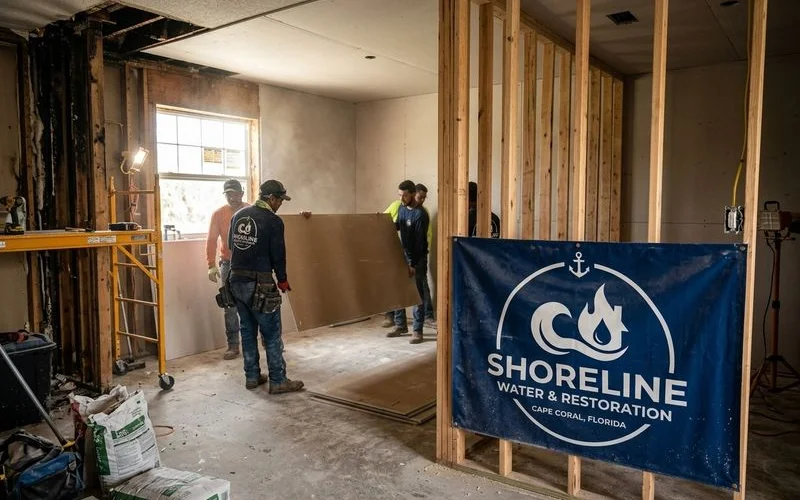
Reconstruction is typically the longest phase. As a licensed Florida builder (CGC1534410), we handle all reconstruction in-house:
- Demolition — removing fire-damaged structural materials (drywall, insulation, flooring) that cannot be salvaged
- Structural repair — replacing damaged framing, trusses, and load-bearing elements
- Rough-in work — coordinating electrical, plumbing, and HVAC repairs or upgrades
- Drywall installation — hanging, taping, and finishing new drywall
- Flooring — installing new tile, hardwood, LVP, or carpet
- Painting — priming and painting all new and repaired surfaces
- Finish work — installing baseboards, trim, cabinetry, fixtures, and hardware
- Final inspection — Lee County building inspection for permitted work
Factors That Affect Timeline
Several factors can extend the fire restoration timeline:
- Scope of damage — a kitchen fire affecting one room may be restored in 2-3 weeks; a whole-house fire can take 3-6 months
- Insurance process — delays in adjuster scheduling, scope agreement, or supplement approval can pause work
- Permit processing — structural reconstruction requires building permits, which have processing times
- Material availability — specialty materials, custom cabinetry, or specific flooring may have lead times
- Mold discovery — if firefighting water has caused mold growth, remediation must be completed before reconstruction
Your Role During Restoration
You do not need to manage the restoration process day-to-day — that is our job. But staying engaged at key decision points helps the project run smoothly:
- Attend the initial scope meeting with your adjuster
- Make finish material selections (paint colors, flooring, fixtures) early to avoid delays
- Respond to calls from your project manager promptly
- Report any concerns or change requests as soon as they arise
From Devastation to Restoration
A house fire is one of the most stressful events a family can experience. Our goal is to remove as much of the burden as possible — managing the entire process from emergency response through final walkthrough, coordinating with your insurance company, and keeping you informed at every stage. Your home will be restored to pre-loss condition, and in many cases, the rebuilt areas will be better than before.
Call (239) 323-1779 for fire damage restoration in Cape Coral. We are here 24/7.

Paul Breehne
Regional Franchise Operator
Paul Breehne is a Regional Franchise Operator for Shoreline Water & Restoration in Southwest Florida, bringing over a decade of hands-on restoration experience to the Cape Coral market.
Need Emergency Restoration?
Shoreline Water & Restoration provides 60-minute emergency response in Cape Coral.
Call (239) 323-1779