Does Insurance Cover Hurricane Damage in Cape Coral? What Homeowners Need to Know
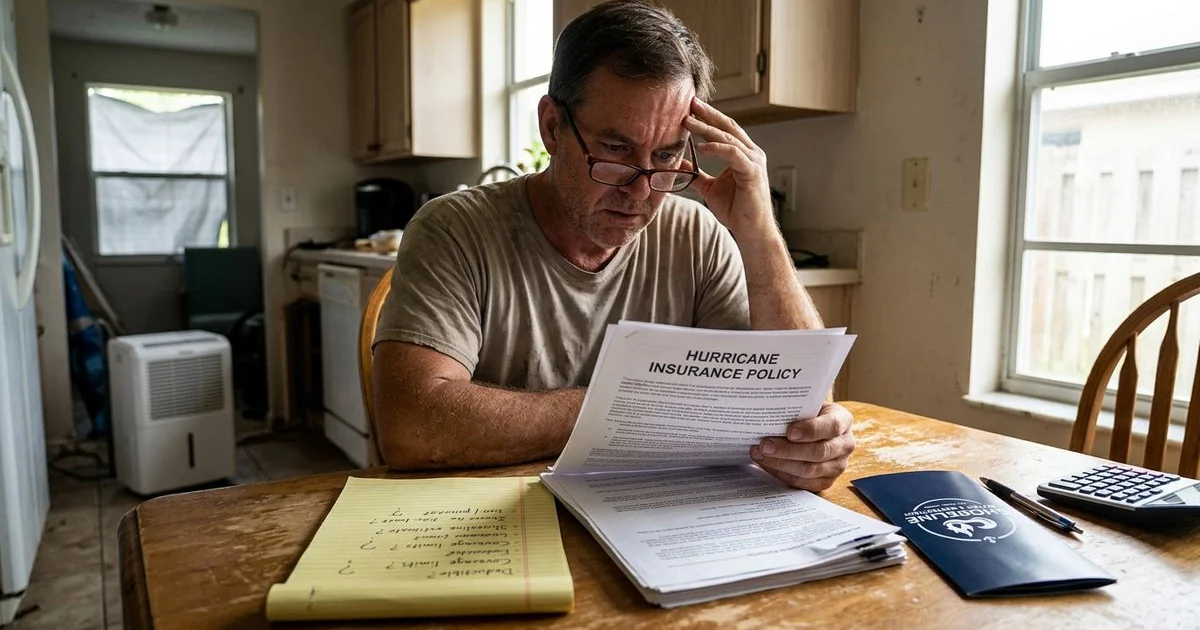
We understand how confusing Florida’s property insurance market has become recently. The legislation passed over the last few years completely changed the rules for property owners. Our team sees the fallout of these changes after every major storm.
People constantly ask us: Does Insurance Cover Hurricane Damage in Cape Coral? We find that the answer usually comes down to reading the fine print.
What Homeowners Need to Know involves separate deductibles and strict flood requirements.
Our experience shows that understanding the difference between wind and water damage puts you in a stronger position before a storm hits. Let’s examine the current data, explain the coverage gaps, and look at the exact steps you need to take.
Does Insurance Cover Hurricane Damage in Cape Coral? What Homeowners Need to Know About Standard Policies
Our crews inspect hundreds of homes across Lee County after every severe storm season. Your standard Florida homeowner insurance policy, typically an HO-3 or HO-5, covers damage from wind and fallen debris. We want to highlight exactly what these policies protect against:
- Wind damage: roof sections torn off, siding ripped away, windows broken by wind pressure.
- Wind-driven rain: water that enters through storm-created openings like broken windows or damaged roof sections.
- Fallen trees and debris: structural damage from wind-driven objects.
- Fire: electrical fires caused by storm damage or lightning.
- Additional Living Expenses (ALE): temporary housing and living costs while your home is being repaired.
Homeowners frequently misunderstand wind-driven rain, leading to denied claims. Our experts confirm the insurance company will only pay if the storm created the opening first, like a tree breaking a window. Water seeping through old, undamaged window seals is usually classified as a maintenance failure. We advise clients to verify their ALE coverage limits. This coverage will typically pay for a hotel and meals up to 20% of your total dwelling limit while repairs happen.
What Standard Homeowner Insurance Does NOT Cover
Our adjusters know that rising water is the most critical exclusion for coastal properties. Standard homeowner insurance completely excludes damage from storm surge, canal overflow, or flash flooding. We tell every homeowner that Cape Coral’s 400 miles of canals present a massive risk. Any water that enters your home from the ground level upward requires a separate flood insurance policy.
The Coverage Gap Between Wind and Flood
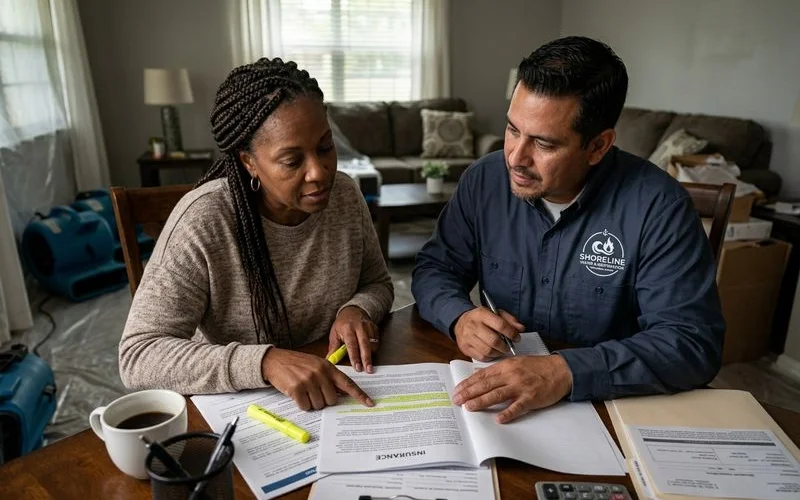
Our biggest challenge during a storm recovery is the concurrent causation clause. During a hurricane, wind and flooding often strike the exact same property simultaneously. We regularly see disputes where wind tears off a roof while a storm surge floods the ground floor. Your homeowner policy pays for the roof repair and rain damage, but the ground floor is entirely uninsured without a flood policy. Our state-backed insurer, Citizens Property Insurance Corporation, is tightening its rules. By March 2026, Citizens requires flood insurance for all policies covering homes valued over $400,000, regardless of the flood zone.
Gradual Deterioration
We often encounter denied claims based on pre-existing conditions. Insurance carriers do not pay for damage caused by a lack of maintenance or gradual deterioration.
The Hurricane Deductible
Our clients are often surprised by how Florida law structures storm deductibles. Florida homeowner insurance policies include a separate hurricane deductible that is significantly higher than a standard deductible. We typically see policies with options of $500, 2%, 5%, or 10% of the dwelling coverage amount. By state law, this deductible applies once per calendar year, not per individual storm. We prepared this quick comparison to show the financial impact on a $300,000 home:
| Deductible Type | Example Percentage | Out-of-Pocket Cost |
|---|---|---|
| Standard AOP | Flat Fee | $1,000 |
| 2% Hurricane | 2% | $6,000 |
| 5% Hurricane | 5% | $15,000 |
The specific timeframes that trigger this higher cost are strictly defined by law. We review policies and confirm this window kicks in at the first National Hurricane Center warning. It remains active until 72 hours after the final warning is lifted for any part of Florida. We remind clients that if a second storm hits later in the same calendar year, the rules work in your favor. You only pay the remaining balance of that annual hurricane deductible or your standard deductible, whichever is higher.
Flood Insurance
Our service area includes thousands of properties in high-risk zones. Most flood policies in Cape Coral come from the National Flood Insurance Program, which FEMA administers. We help owners understand the specific limits of these federal policies:
- Building coverage caps at $250,000 for residential structures.
- Contents coverage caps at $100,000 for personal property.
- A 30-day waiting period applies, so you cannot buy coverage right before a storm hits.
NFIP Zone AE policies in Cape Coral average $800 to $2,500 per year before community discounts. Our data shows that under FEMA’s Risk Rating 2.0 system, grandfathered policy rates are increasing by up to 18% annually to reflect true risk. An Elevation Certificate costs between $300 and $600 but can save you over $800 annually if your first floor sits above the Base Flood Elevation. We highly recommend getting this certificate before buying a policy. Private carriers, like Neptune, often provide coverage above the $250,000 NFIP limit and sometimes offer shorter waiting periods.
Filing a Hurricane Damage Claim
Our state recently enacted Senate Bill 2-A, which drastically changed the claims timeline. Florida homeowners now have exactly one year from the date of the hurricane to file an initial damage claim. We urge you to act fast because the old three-year window is permanently gone. Promptly following these specific steps will protect your financial interests:
Step 1: Document Damage Immediately
Our technicians always take photos and videos of all damage before beginning any cleanup. This documentation serves as your primary evidence for the insurance company.
Step 2: Report the Claim
We recommend calling your carrier the exact same day the storm passes. Under the new SB 2-A rules, insurers must acknowledge your claim within 7 days and make a payment decision within 60 days.
Step 3: Begin Emergency Mitigation
Our rapid response teams handle board-ups and tarping, and water extraction immediately. Insurance carriers expect emergency mitigation, so do not wait for an adjuster’s permission to stop further water damage.
Step 4: Meet with the Adjuster
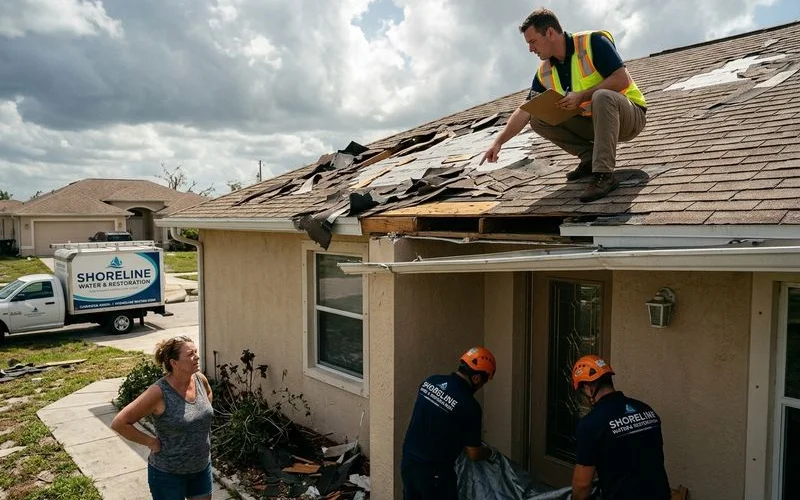
We make sure to have a representative present when the insurance adjuster arrives. Point out all hidden damage in attics or behind walls, as the adjuster must conduct a physical inspection within 30 days of receiving your proof of loss.
Step 5: Review the Scope and Estimate
Our estimators compare the insurance company’s Xactimate scope against our own detailed documentation. Florida law now requires the insurer to provide the adjuster’s estimate within 7 days of its creation. We can help you file a supplement if the initial estimate misses critical structural damage. Supplemental claims must be filed within 18 months of the original storm date.
Tips for Maximizing Your Hurricane Claim
Our team has managed hundreds of large restorations, and preparation is always the key to a fair settlement. Recent legal changes make it harder to sue your insurance company, meaning your initial documentation must be flawless. We recommend these specific strategies to secure a full payout:
- Document pre-storm condition: Take a video walking through your home before hurricane season to establish a baseline.
- Keep all receipts: Emergency expenses, including hotels and generator fuel, are reimbursable under ALE coverage.
- Do not settle too quickly: Initial offers often miss hidden water damage behind drywall that only appears during restoration.
- Use a direct-billing restoration company: Companies that use Xactimate and bill insurers directly can easily submit the exact paperwork adjusters need.
- Consider a public adjuster: For major claims over $50,000, licensed public adjusters take a 10% fee to advocate on your behalf.
Florida law also saw the repeal of the one-way attorney fee statute in 2022. We remind clients that if you sue your insurer today and win, you must pay your own legal costs. This makes utilizing public adjusters and filing accurate initial paperwork much more valuable.
FEMA Assistance
Our community relies on federal support when private insurance falls short. FEMA Individual Assistance becomes available for Cape Coral homeowners after a federally declared disaster. We want to clarify that FEMA does not duplicate your insurance payout, but rather fills the specific gaps. Programs include temporary housing grants and low-interest disaster loans through the Small Business Administration.
Our local SBA office can authorize property repair loans up to $500,000 for your primary residence. Apply directly at DisasterAssistance.gov or call (800) 621-3362 the moment a declaration is issued for Lee County.
We are standing by to help you recover. Call (239) 323-1779 for hurricane damage restoration in Cape Coral. Our team coordinates directly with your insurance company to ensure seamless, accurate claims processing. Does Insurance Cover Hurricane Damage in Cape Coral? What Homeowners Need to Know is that proactive preparation makes all the difference.

Paul Breehne
Regional Franchise Operator
Paul Breehne is a Regional Franchise Operator for Shoreline Water & Restoration in Southwest Florida, bringing over a decade of hands-on restoration experience to the Cape Coral market.
Need Emergency Restoration?
Shoreline Water & Restoration provides 60-minute emergency response in Cape Coral.
Call (239) 323-1779