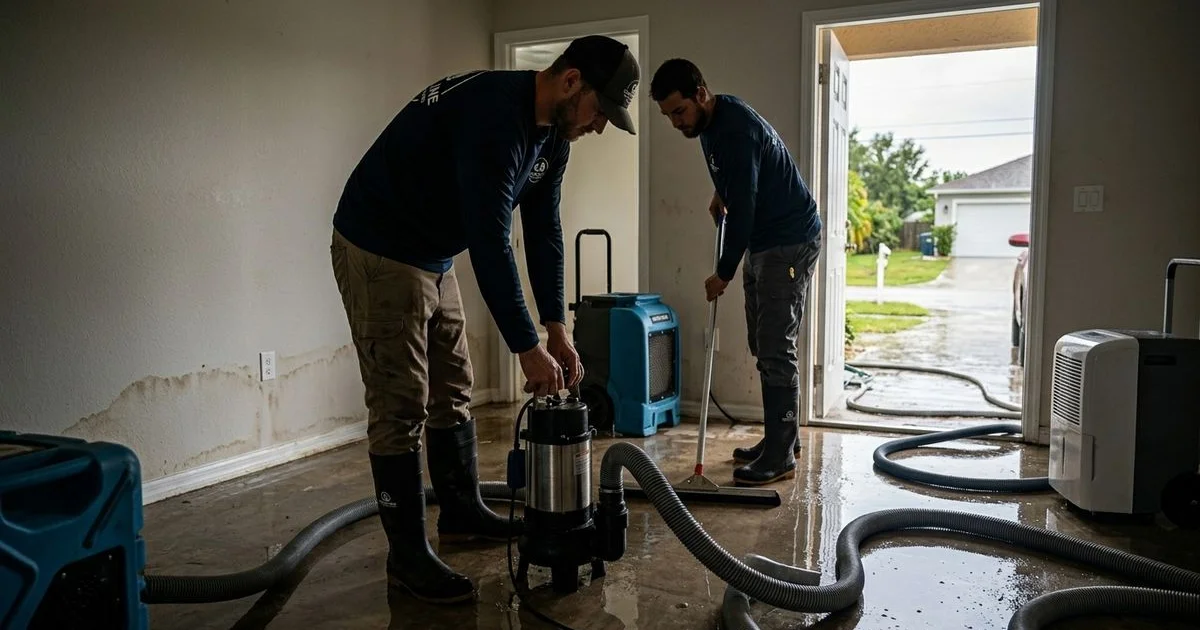
Professional Water and Flood Cleanup in Cape Coral
Comprehensive water and flood cleanup including standing water removal, debris clearing, sanitization, and structural drying for Cape Coral properties.
Emergency CallWhether from a burst pipe, appliance failure, or storm surge, standing water causes escalating damage to your property with every passing hour. Floors buckle, drywall swells, furniture warps, and in Cape Coral’s humid subtropical climate, mold growth can begin within 24 to 48 hours. Comprehensive water and flood cleanup requires more than just removing visible water — it demands a systematic approach that addresses extraction, contamination, structural drying, and verification.
Shoreline Water & Restoration provides complete water and flood cleanup services for residential and commercial properties throughout Cape Coral. Our IICRC-certified technicians handle every phase of the cleanup process, from initial water removal through final drying verification, ensuring your property is returned to a safe, dry condition.
Complete Water and Flood Cleanup Process
Water Extraction The first priority is removing all standing water as quickly as possible. Our crews deploy truck-mounted extraction units capable of removing thousands of gallons per hour, submersible pumps for deep water situations, and weighted extraction tools for removing water trapped in carpets, padding, and hard surface flooring. We extract water from every accessible area including closets, cabinets, and utility spaces.
Debris Clearing and Removal Flood events often bring debris into your property — mud, sediment, vegetation, and damaged building materials. We clear all debris, remove unsalvageable materials (saturated carpet padding, damaged insulation, compromised drywall), and dispose of waste according to local regulations. This step exposes structural surfaces for proper drying and treatment.
Content Protection and Salvage Furniture, electronics, documents, and personal belongings are assessed for salvageability. Items that can be saved are elevated, relocated to dry areas, or packed out to our climate-controlled facility for professional cleaning. We document all damaged contents for your insurance claim.
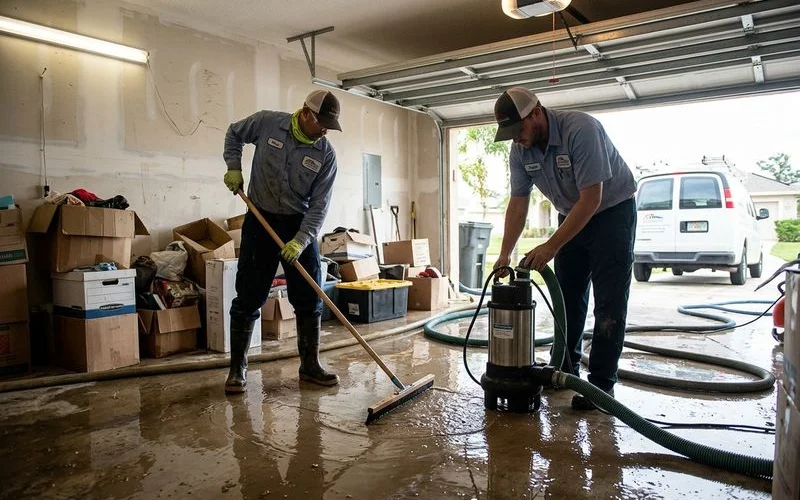
Antimicrobial Treatment and Sanitization All affected surfaces are treated with EPA-registered antimicrobial solutions to prevent bacterial and mold growth. For flood water events classified as Category 2 (gray water) or Category 3 (black water), more aggressive decontamination protocols are applied. Surfaces are cleaned, sanitized, and treated with antimicrobial coatings that provide ongoing protection during the drying process.
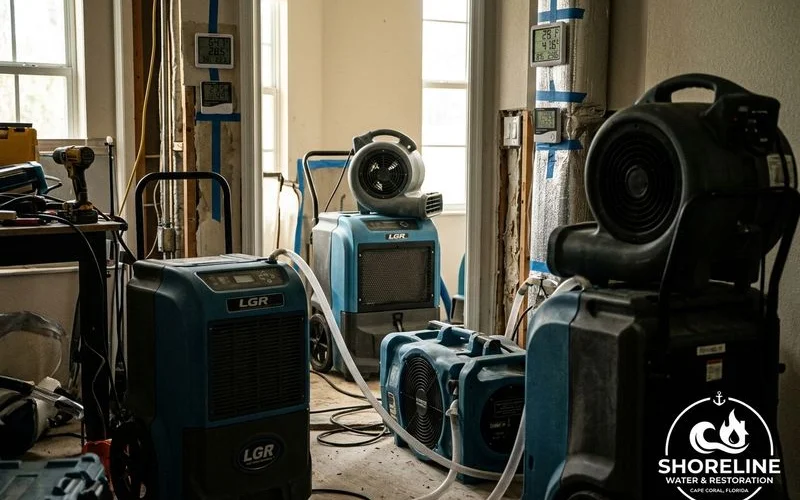
Structural Drying Commercial-grade dehumidifiers and high-velocity air movers are deployed throughout the affected area to remove moisture from structural materials — wood framing, concrete, drywall, and subflooring. Our technicians use professional moisture meters and thermal imaging cameras to monitor progress daily, adjusting equipment placement to optimize drying efficiency. In Cape Coral’s high-humidity environment, proper structural drying is critical for preventing secondary mold growth.
Drying Verification and Clearance Cleanup is not complete until moisture levels in all affected materials return to acceptable standards. We use pin-type and pinless moisture meters, relative humidity readings, and thermal imaging to verify that every affected area has reached target moisture levels. Documentation of final readings provides verification for your insurance carrier.
Water Categories and Their Impact on Cleanup
The IICRC classifies water damage by contamination level, which determines the appropriate cleanup protocols:
- Category 1 (Clean Water) — from supply lines, faucets, or appliance feeds. Standard extraction and drying procedures apply.
- Category 2 (Gray Water) — from appliance discharge, toilet overflows without solids, or sump pump failures. Requires antimicrobial treatment and more aggressive cleaning.
- Category 3 (Black Water) — from sewage, rising flood water, or storm surge. Requires full decontamination, removal of all porous materials that contacted the water, and hospital-grade sanitization.
Water category can escalate over time — clean water left standing for 48 hours or more may be reclassified to Category 2 or 3 due to bacterial growth. This is another reason rapid response is essential.
Cape Coral Flood Risks
Cape Coral’s geography creates heightened flood risks for property owners. The city sits at a low elevation, features over 400 miles of canals, and receives an average of 55 inches of rainfall annually — with the heaviest rain concentrated during hurricane season from June through November. Properties near canals, in flood zones, or in low-lying areas face particular vulnerability to storm surge, tidal flooding, and flash flood events.
Insurance Coverage for Water and Flood Cleanup
Standard homeowner insurance typically covers water cleanup from internal sources (burst pipes, appliance failures, sudden roof leaks). Flood damage from rising water, storm surge, and canal overflow requires a separate flood insurance policy through the National Flood Insurance Program (NFIP) or a private flood insurer. We work with both standard and flood insurance carriers, billing directly and handling all documentation.
Call (239) 323-1779 for professional water and flood cleanup in Cape Coral. 60-minute emergency response, 24/7.
Ready to Get Started?
Call now for a free assessment and 60-minute emergency response in Cape Coral.