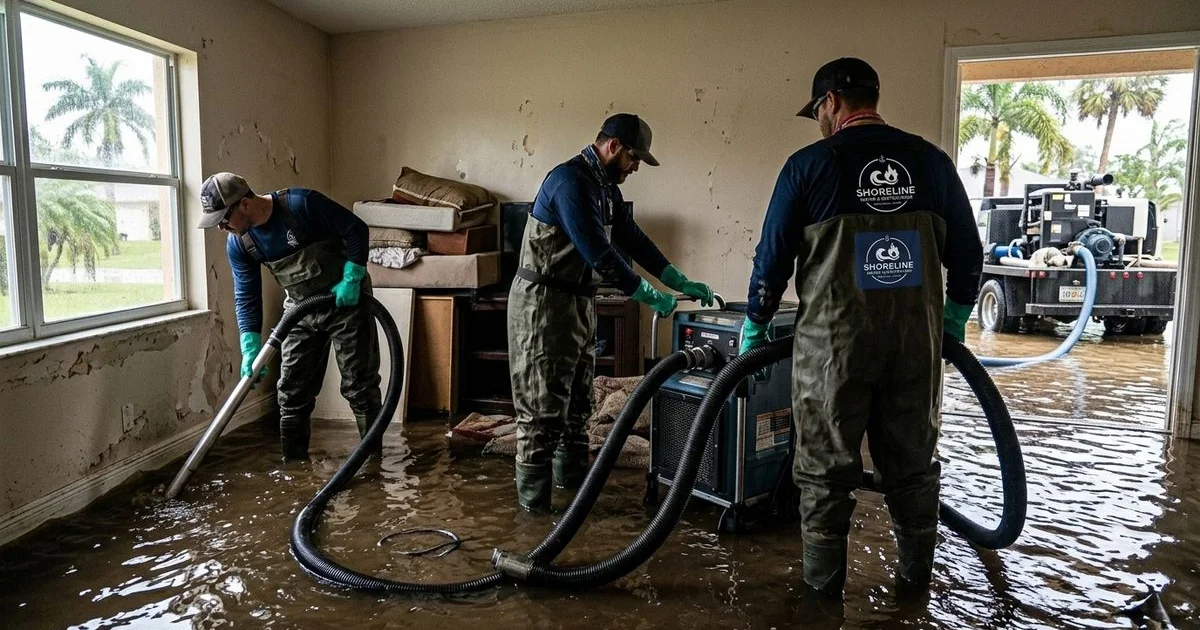
Complete Flood Damage Restoration in Cape Coral
Complete flood damage restoration from storm surge, flash floods, and rising water events, including extraction, sanitization, drying, and structural rebuild.
Emergency CallFlood damage presents challenges that go far beyond typical water damage. Rising flood water is almost always classified as Category 3 (black water) — it carries sewage, chemicals, bacteria, and debris that contaminate every surface it touches. The volume of water involved is typically much greater than a plumbing failure, and the contamination level requires aggressive decontamination protocols that standard water damage cleanup does not address.
Cape Coral’s unique geography makes it particularly vulnerable to flooding. With over 400 miles of canals, low-lying elevation, and an average of 55 inches of rainfall annually — concentrated heavily during the June to November hurricane season — flood events are a persistent threat. Shoreline Water & Restoration provides complete flood damage restoration for Cape Coral properties, from contaminated water extraction through full structural rebuild.
Flood Damage Restoration Process
Emergency Response and Assessment Our flood response teams are deployed immediately after flood waters begin receding and conditions are safe for entry. We assess structural integrity before entering the building, identify hazards (electrical, structural, contamination), and develop a prioritized restoration plan. All damage is documented with photographs and detailed notes for insurance and FEMA claims.
Contaminated Water Extraction Flood water is treated as Category 3 black water regardless of its source. Our technicians wear full PPE including Tyvek suits, respirators, and chemical-resistant boots during extraction. We use truck-mounted pumps and submersible extractors to remove all standing water, followed by detailed extraction of water from carpet, padding, and structural cavities.
Debris Removal and Demolition Flood events deposit mud, sediment, and debris throughout your property. We remove all flood-deposited debris, and then demolish materials that cannot be decontaminated — including drywall (typically removed to at least 2 feet above the visible flood line), carpet, padding, insulation, and any porous materials that contacted flood water. This controlled demolition exposes structural framing for cleaning and drying.
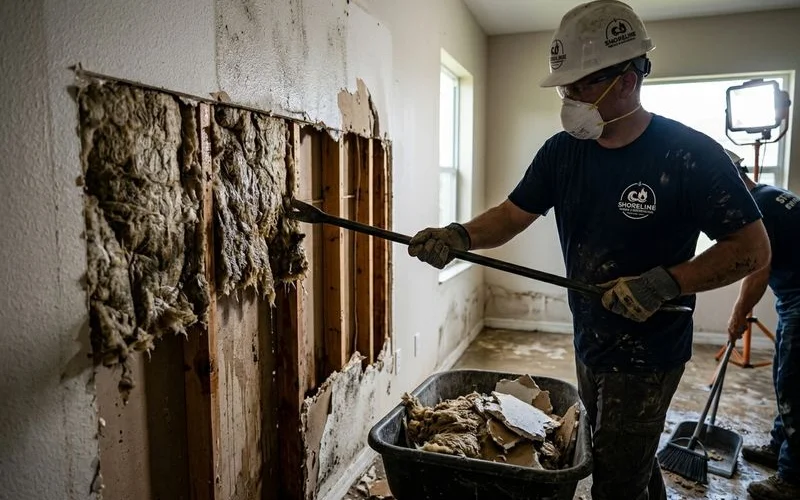
Decontamination and Antimicrobial Treatment All remaining structural surfaces — wood framing, concrete, block walls, metal — are cleaned with antimicrobial solutions and pressure-washed where appropriate. We apply EPA-registered antimicrobial treatments designed to eliminate bacteria, viruses, and mold spores deposited by flood water. HVAC systems are inspected and cleaned or replaced if flood water entered the ductwork.
Structural Drying Flood-affected structures require extended drying times due to the volume of water absorbed and Cape Coral’s high ambient humidity. We deploy commercial-grade dehumidifiers and high-velocity air movers, positioning them based on moisture mapping data collected with professional meters and thermal imaging cameras. Daily monitoring tracks drying progress and guides equipment adjustments.
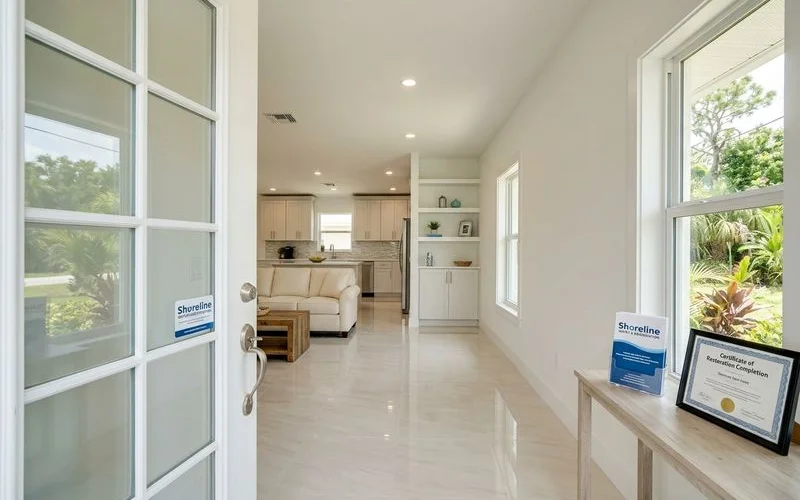
Reconstruction As a licensed Florida builder (CGC1534410), we handle complete structural reconstruction after flood damage. This includes new drywall installation, insulation replacement, flooring installation, painting, cabinetry, and all finish work. We bring your property back to pre-flood condition — or better — under a single contract.
Types of Flooding in Cape Coral
Storm Surge Flooding Cape Coral’s coastal location exposes properties to storm surge during hurricanes and tropical storms. Storm surge can push ocean and canal water inland, flooding properties with saltwater that is particularly corrosive and damaging to building materials, appliances, and electrical systems.
Flash Flooding Heavy rainfall events can overwhelm drainage systems, causing flash flooding in low-lying areas. Cape Coral’s flat terrain and high water table mean that rainwater drains slowly, increasing the risk of standing water around and inside properties.
Canal Overflow The city’s extensive canal system connects to the Caloosahatchee River and surrounding waterways. During high tides, heavy rain, or tropical storms, canal levels can rise and overflow into adjacent properties.
Groundwater Intrusion Cape Coral’s high water table means that prolonged heavy rain can push groundwater upward through concrete slab foundations, causing moisture intrusion from below. This type of flooding is often not visible until flooring materials begin showing damage.
Insurance and FEMA for Flood Damage
Standard homeowner insurance policies do not cover flood damage from rising water. Flood damage requires a separate flood insurance policy, typically through the National Flood Insurance Program (NFIP) or a private flood insurer. After a federally declared disaster, FEMA assistance may also be available.
Our team has extensive experience with flood insurance claims and FEMA applications. We handle all documentation, coordinate with adjusters and FEMA inspectors, and ensure that your claim captures the full scope of damage including structural, contents, and remediation costs.
Protecting Your Cape Coral Property from Future Flooding
After flood restoration, we can advise on flood mitigation improvements for your property. These may include elevated electrical systems, flood-resistant building materials, sump pump installation, improved drainage, and backflow prevention devices. Many of these improvements can qualify you for reduced flood insurance premiums.
Call (239) 323-1779 for flood damage restoration in Cape Coral. Emergency response available 24/7.
Ready to Get Started?
Call now for a free assessment and 60-minute emergency response in Cape Coral.