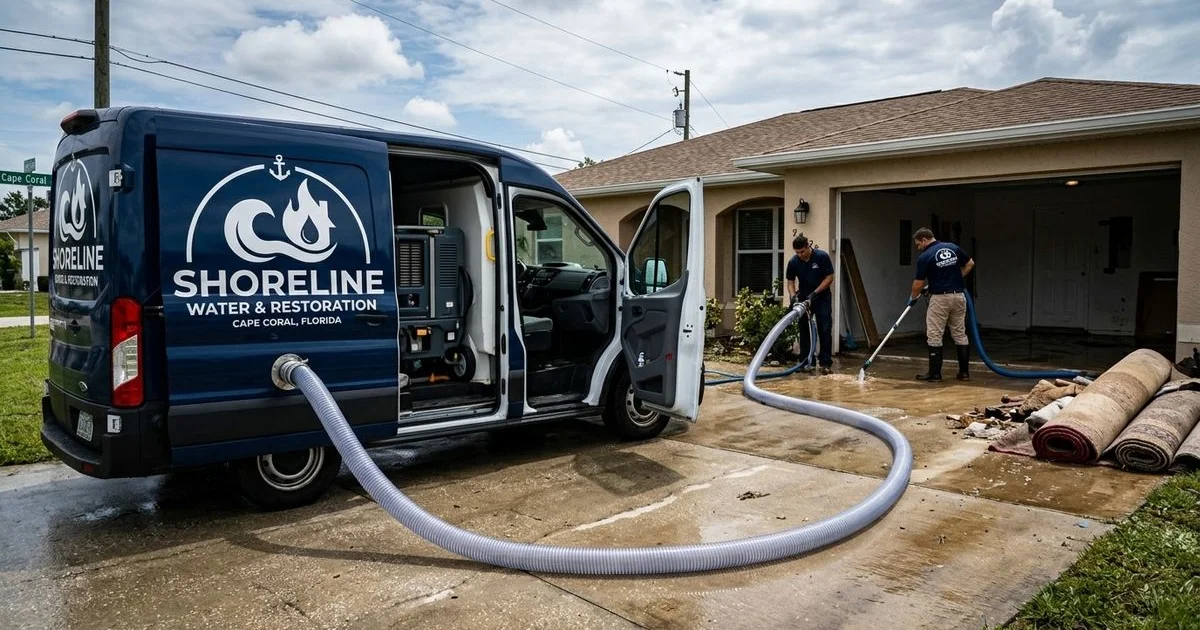
Fast Water Removal and Extraction in Cape Coral
Professional water removal and extraction using truck-mounted pumps, submersible extractors, and industrial wet vacuums for rapid water elimination.
Emergency CallStanding water is the primary enemy of your property during any water damage event. Every minute that water remains in contact with building materials, it is being absorbed — swelling drywall, saturating insulation, warping wood framing, delaminating flooring, and creating the damp conditions that lead to mold growth. The speed and thoroughness of water removal directly determines the scope of damage and the cost of restoration.
Shoreline Water & Restoration deploys professional-grade water removal and extraction equipment designed for rapid, complete water elimination. Our truck-mounted extraction systems, submersible pumps, and industrial wet vacuums can handle any volume of standing water — from a small appliance leak to a fully flooded building.
Water Removal Equipment We Deploy
Truck-Mounted Extraction Units Our primary extraction tool is a truck-mounted pump system capable of removing thousands of gallons per hour. These powerful units connect to extraction wands and floor tools via high-capacity hoses, drawing water out of your property and into our truck-mounted holding tanks. The extraction power of a truck-mounted system far exceeds portable equipment.
Submersible Pumps For deep standing water (6 inches or more), we deploy submersible pumps directly into the flooded area. These pumps sit on the floor beneath the water surface and continuously pump water out through discharge hoses. Multiple submersible pumps can be deployed simultaneously in large-scale flooding situations.
Industrial Wet Vacuums For remaining water after primary extraction — the water trapped in carpet fibers, behind baseboards, and in floor seams — we use commercial-grade wet vacuums with specialized attachments. These include weighted extraction tools that apply pressure to carpet and padding, crevice tools for edges and corners, and hard surface tools for tile, hardwood, and concrete.
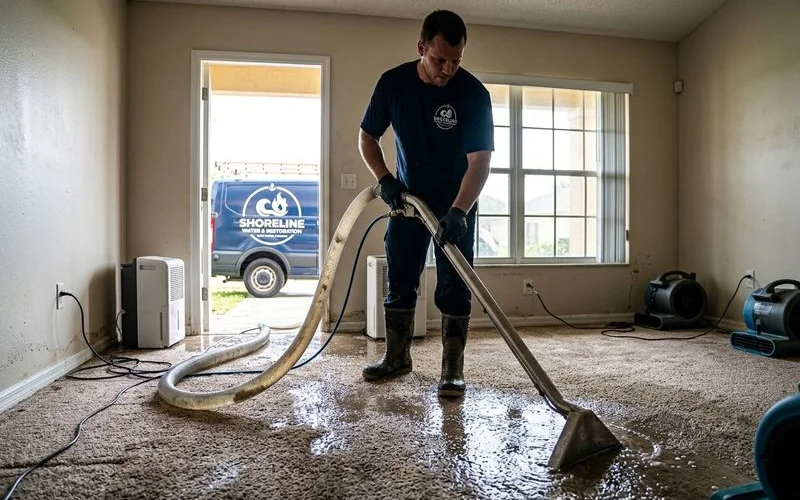
Carpet and Pad Extraction Carpet and carpet padding trap significant amounts of water that are not visible on the surface. We use weighted extraction tools that compress the carpet and padding, forcing trapped water to the surface where the vacuum can capture it. In many cases, we lift the carpet, remove saturated padding, and extract water from the subfloor beneath — this is often the critical step that prevents mold growth under carpeted areas.
Hard Surface Extraction Tile, hardwood, vinyl, and concrete floors each require different extraction approaches. We use squeegee attachments for smooth surfaces, riding extractors for large commercial spaces, and specialized tools for grout lines and expansion joints where water collects. For hardwood floors, we monitor moisture content to determine whether floors can be saved through controlled drying or need replacement.
Why Professional Extraction Matters
Many property owners attempt to remove water themselves using shop vacuums, mops, and towels. While these efforts can reduce surface water, they leave significant moisture in building materials that continues causing damage:
- Carpet padding retains 5 to 10 times its weight in water — even carpet that feels damp on top may have fully saturated padding underneath
- Drywall wicks water upward from the floor at a rate of approximately 1 inch per hour — by the time you see watermarks on the wall, moisture has already reached well above the visible line
- Subflooring — particleboard and OSB subflooring absorb water and begin swelling and deteriorating within hours
- Concrete slab — water can travel beneath floating floors and collect on top of concrete slabs, remaining hidden from view
Professional extraction equipment removes water from these concealed areas that consumer equipment cannot reach.
The Extraction-to-Drying Transition
Water extraction and structural drying are two distinct but connected phases. Extraction removes bulk water — the standing water and water trapped in materials. Drying removes the remaining moisture that has been absorbed into structural materials. The more thorough the extraction, the faster and more effective the drying phase will be.
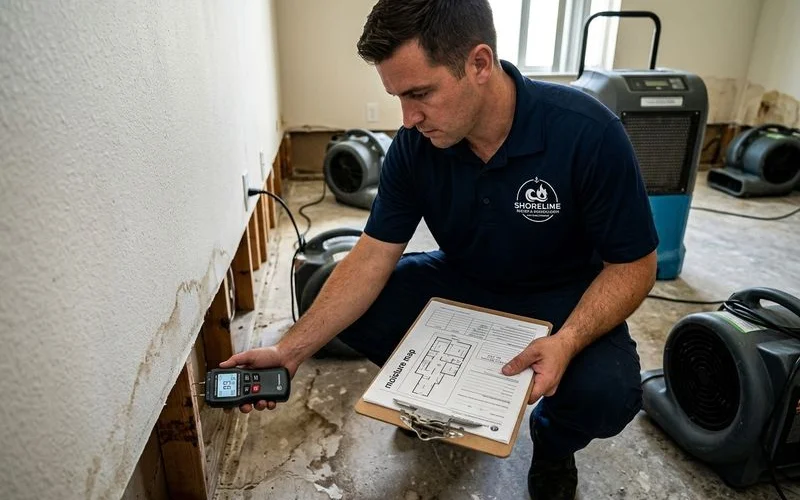
After extraction is complete, our technicians take initial moisture readings throughout the affected area to establish baseline moisture content in all materials. These readings guide the placement of dehumidifiers and air movers for the structural drying phase and serve as the starting point for daily moisture monitoring.
Response Time and Extraction Speed
Our 60-minute emergency response guarantee means extraction begins within the first hour after your call. A typical residential extraction — removing standing water from a single floor of a standard Cape Coral home — can be completed in 2 to 4 hours. Larger properties and deeper flooding may require additional time and equipment. Commercial extractions are scaled with multiple crews and equipment units deployed simultaneously.
Call (239) 323-1779 for fast water removal and extraction in Cape Coral. Emergency teams standing by 24/7.
Frequently Asked Questions
What equipment does Shoreline use for water extraction?
We deploy truck-mounted extraction units capable of removing thousands of gallons per hour, submersible pumps for deep standing water, and industrial weighted extraction tools for carpets and hard surfaces. For drying, we use commercial dehumidifiers, high-velocity air movers, and infrared thermal imaging cameras to monitor hidden moisture.
Ready to Get Started?
Call now for a free assessment and 60-minute emergency response in Cape Coral.